
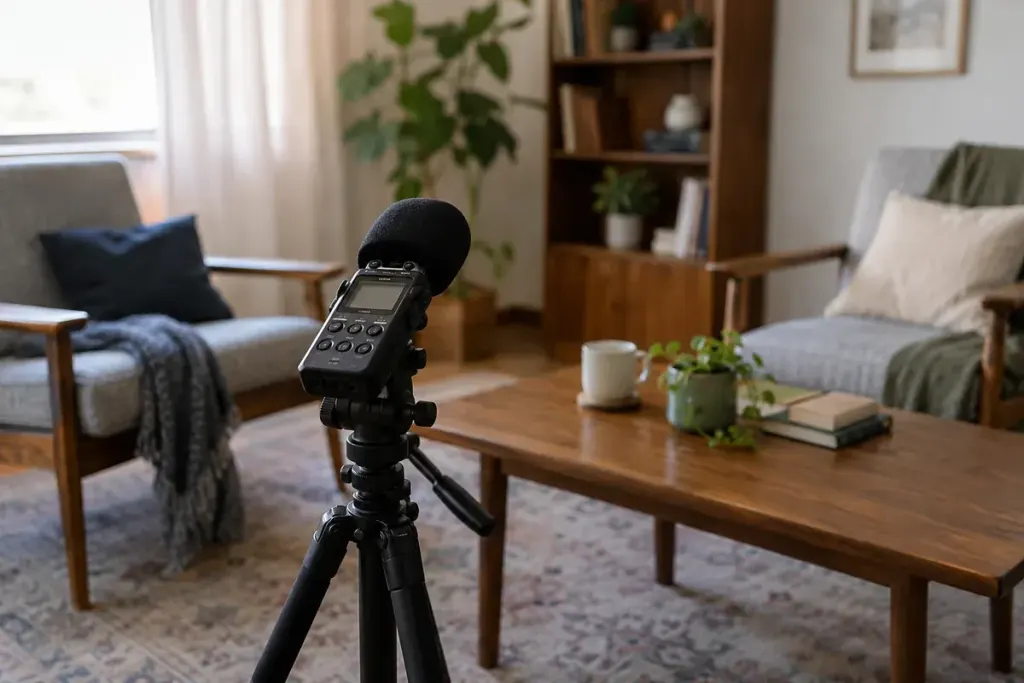
The interview sounds clear, but only in the left headphone. Buying a new microphone is an expensive first response to a problem that may have appeared later in the edit. Find the first version where the voice becomes one-sided.
Compare three versions of the same sentence
Choose a short spoken passage. Listen to the original recording, the editing timeline and the exported file through the same headphones. Keep the volume comfortable and unchanged. Write which versions contain the problem; that small record narrows the search considerably.
If the source is correct and the export is not, inspect track routing and export settings. If the source already has speech on only one channel, check how the recording was captured and interpreted by the editor. A mono microphone does not mean the finished voice should reach only one ear.
Separate speech from genuine stereo material
Imagine an interview with one microphone and a separate stereo music bed. The voice needs appropriate centred routing; the music may intentionally contain different left and right information. Applying the same correction indiscriminately to every track can change material that was working correctly.
Use the editor’s documentation for its channel-mapping controls. Work on a duplicate sequence, make one adjustment, and export the short passage again. Avoid deleting a channel merely because its waveform looks smaller: confirm what it contains by listening.
Check the version viewers receive
YouTube’s audio troubleshooting guidance also describes stereo-to-mono conversion and phase problems that can make sound disappear on playback. A balanced headphone test therefore does not replace checking a phone speaker or a mono playback option.
Finally, review the uploaded test privately where the platform permits it. Confirm intelligible speech at the beginning, middle and end. Keep a short export preset note once the cause is understood, including the application version. The useful outcome is a repeatable listening check, not a mysterious setting copied into every future project.