
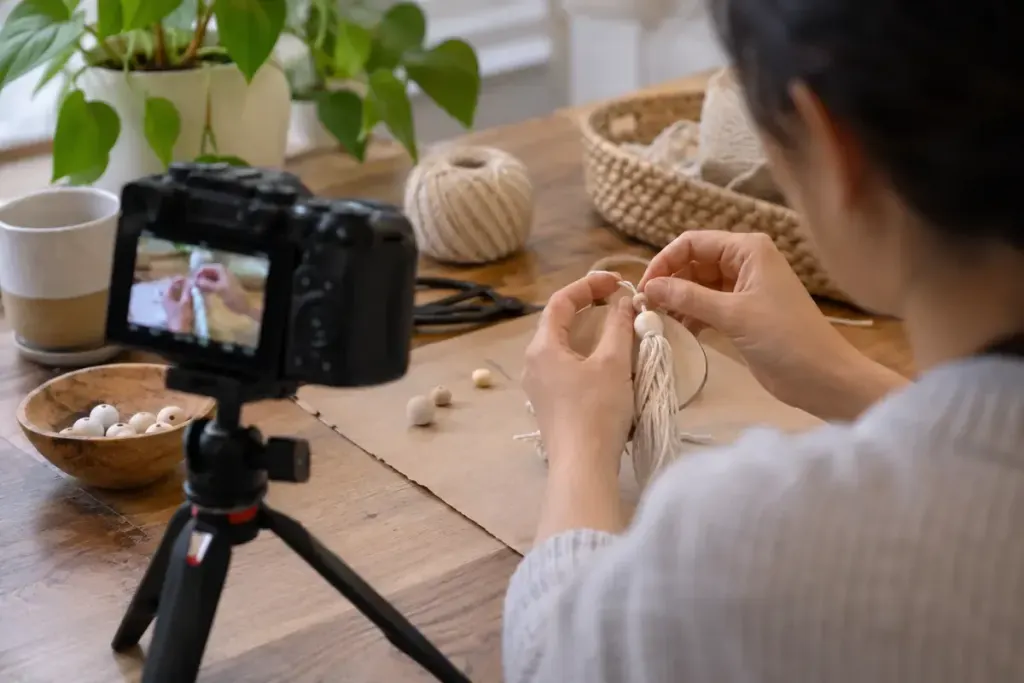
“This latch is difficult to reach” tells the audience a problem. A close shot of the hand reaching around the object shows why. That is a useful job for B-roll: supplying visible evidence or context that the spoken sentence cannot carry alone.
Read the script and underline concrete objects, actions and changes. Beside each, write the shot that would help the viewer understand it. If a shot has no connection to the sentence, it may be decoration rather than support.
Capture an action with a beginning and an end
Film the hand approaching the latch, operating it and moving away. Leave a little usable time around the action. An editor can shorten a complete movement more easily than invent the missing moment before contact.
Get a wider view when the location matters, then a detail view when the mechanism matters. Check focus and exposure on the actual subject, not just the surrounding room.
Keep the footage honest
If you recreate an action for a demonstration, do not present it as documentary evidence of an event you did not record. Use your own demonstration material and disclose reconstruction when the distinction affects the story.
Avoid filming private screens, addresses or bystanders simply because they sit behind the subject. Arrange permission where needed and review the frame before recording a long sequence.
During editing, place the supporting shot where the viewer first needs the detail. Cutting to the latch after the explanation has moved on to another topic makes the relationship harder to follow.
Listen without watching, then watch without sound. The first pass tests whether the spoken explanation still makes sense; the second reveals whether the selected images form a coherent sequence. B-roll should add useful information, not merely conceal every edit in the talking-head footage.
Keep a short list of missing shots rather than gathering hours of loosely related material. A few well-chosen details can make the video clearer and the edit much easier to finish.