
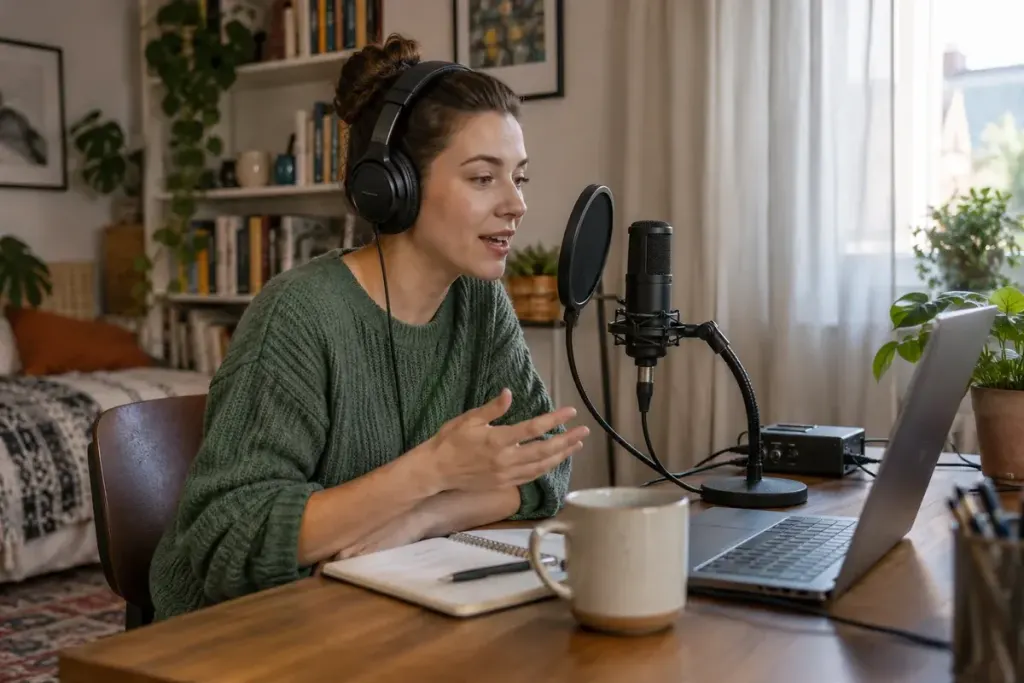
The recording sounds hollow, so you start comparing microphones. Before buying one, record the same sentence in two places in the room. If the sound changes substantially, the room and placement deserve attention first.
A microphone captures what reaches it, including reflections and background noise. Shure’s microphone-technique guide explains how distance and reflective surfaces affect spoken recordings. More expensive equipment does not remove those conditions automatically.
Listen before speaking
Record a few seconds of room sound. Use headphones at a sensible level and listen for a fan, traffic, keyboard noise or a vibrating desk. Identify the source rather than applying noise reduction immediately. Moving away from a noisy computer can be more useful than processing the entire voice track later.
Do not disable essential ventilation or safety equipment to obtain silence. Instead, change the recording position, choose a quieter time or accept a small amount of background sound when the alternative is impractical.
Compare two positions fairly
Keep the microphone, recording settings and spoken sentence the same. Change one thing: move away from the bare wall, turn the setup, or bring the microphone nearer within the manufacturer’s recommended working range. Listen to consonants and the tail of each sentence, where room sound is often easier to notice.
A useful test sentence includes soft speech and a few plosive sounds. Avoid judging only by loudness; the louder version can seem better even when it contains more problems. Compare at similar playback levels.
Watch the surfaces around the microphone
A hard tabletop, window or empty wall can contribute reflections. Ordinary soft furnishings may help, although a curtain is not equivalent to a professionally designed acoustic treatment. Make small, stable changes and keep anything you add clear of heat sources, exits and equipment ventilation.
Check that you are speaking into the correct side of the microphone. Some microphones are addressed from the end; others from the side. A correct-looking desk arrangement can still point the sensitive part in the wrong direction.
Save a repeatable setup
Once you prefer a position, note the distance, angle, gain and location. Make a short test before each session, especially if you have moved the furniture or changed clothing that might rub against a microphone.
Processing can refine a recording, but aggressive noise reduction may create its own distracting sound. Keep an unprocessed original. Aim first for a clear voice with consistent level and a room sound that does not compete with the words. That gives any later editing a much better starting point.