
The action is perfect, but the recording starts half a second after the hand enters frame and stops before it leaves. In the edit, there is no clean beginning or ending. A little extra recording time can save a shot that otherwise looks almost usable.
Editors often call the extra material around a chosen section “handles.” You do not need a rigid five-second rule for every shot. You need enough stable material to make the intended cut without trimming into the action.
Start settled and finish settled
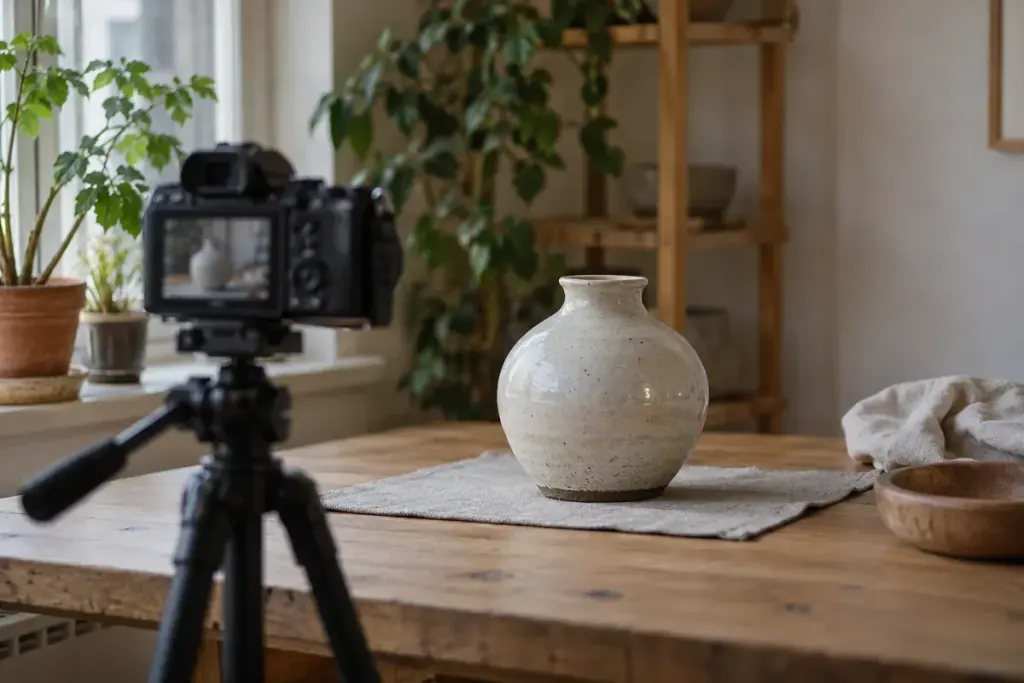
Frame the shot, check focus and exposure, and begin recording before the action starts. Let the camera settle. After the action finishes, hold the composition briefly before moving the camera or speaking to the subject.
For an illustrative product clip, record the empty surface, the hand placing the object, and a short still moment after the hand exits. The editor can choose whether to reveal the object through the action or cut to it already in place.
Capture the whole action when practical
If you need a close-up and a wider view, repeat the action consistently enough that the shots can connect. Note the object’s position and which hand performs the movement. Extra time cannot fix a continuity mismatch, but it gives you more options for hiding or avoiding an awkward cut.
Listen as well as watch. A camera movement, instruction or laugh immediately after the action may limit how much clean audio remains. Keep a clear distinction between the recorded performance and the conversation around it.
During review, mark the intended action and check whether there is usable material on both sides. If the scene can be repeated, fix a missing start or finish while the setup is still available.
The habit costs a little storage and attention, so use judgment during long or unrepeatable events. For controlled filming, those quiet seconds are often what allow the final edit to feel effortless.