
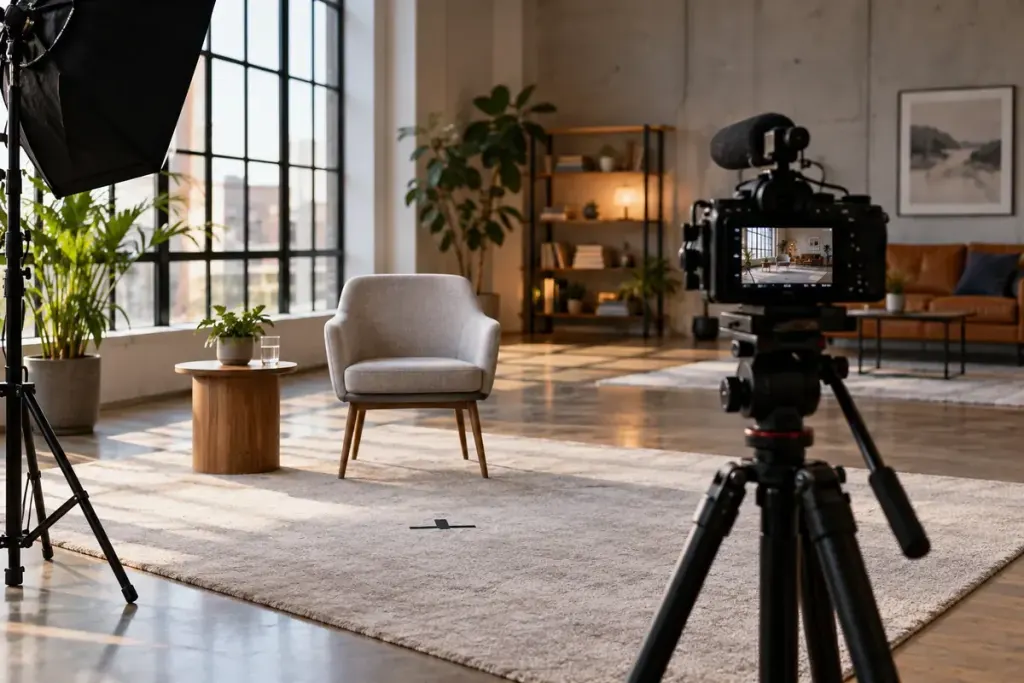
The background looks sharp, the framing is attractive and the presenter starts speaking. Only during editing do you notice that the eyes are soft. A focus check needs the actual subject position, not simply a clear-looking room.
Set the framing before the test
Place the camera securely and establish where the presenter will stand or sit. Check the camera’s focus options in its own manual. Controls and assistance features vary, so a tutorial for another model may not describe your setup.
Canon’s MV-series manual, for example, warns that changing zoom after focus adjustment may affect focus. Treat that as a reminder to verify the complete setup, not a universal button sequence for every camera.
Record the movement you expect
Make a short test with the presenter looking toward the lens, turning naturally and making the movements planned for the take. If they will hold an object toward the camera, include that action. An autofocus system may respond differently when another object enters the frame.
Review the recording at a useful size. A small preview can conceal softness that becomes obvious on a larger screen. Use the camera’s appropriate focus aids, but confirm the recorded result rather than relying only on a coloured indicator.
- Check the intended face or object, not just the background.
- Keep a position mark unobtrusive and safe underfoot.
- Repeat the test after changing framing or subject distance.
- Choose a focus method suited to the expected movement.
If manual focus is used, explain the movement limits to the presenter and leave a comfortable working margin. Do not ask someone to remain unnaturally rigid merely to preserve a fragile setup; revise the shot when needed.
Save the successful test with the production notes. A brief review before the long take is easier than discovering that an otherwise strong performance cannot be repaired by sharpening during export.