
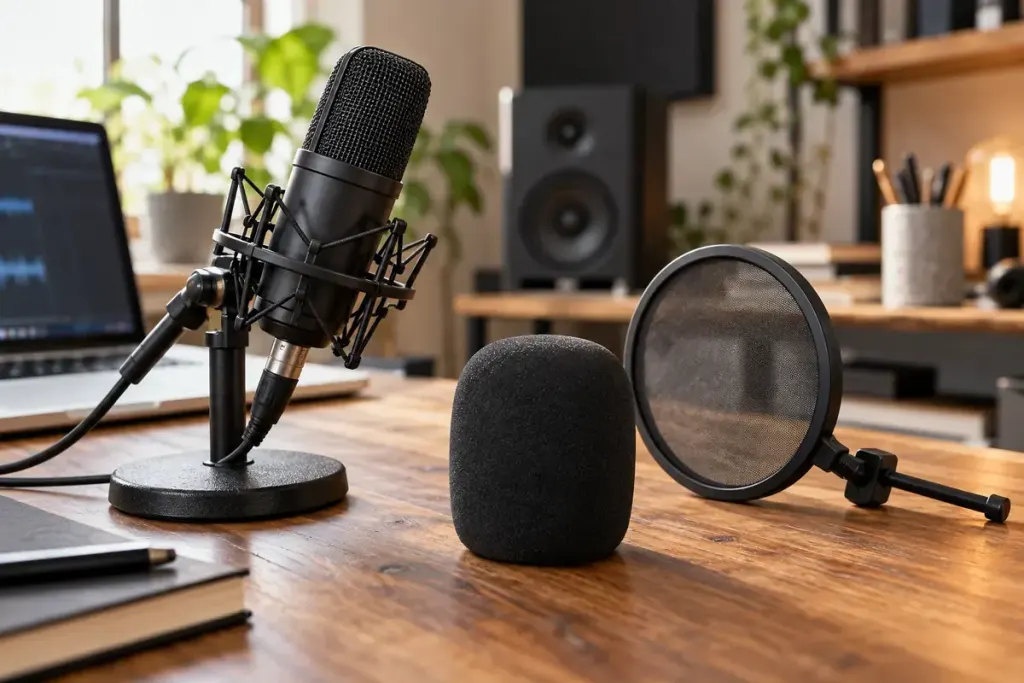
A circular mesh screen in front of a studio microphone looks different from the foam cover fitted over a handheld microphone outdoors. Both affect moving air, but they are not automatically interchangeable solutions.
HARMAN’s pop-filter explanation distinguishes a pop filter from a windscreen. Shure’s wind-noise guidance discusses methods for outdoor conditions. Use these distinctions to choose a setup, then test the microphone and accessory together.
Identify the unwanted sound
A close speaker’s bursts of air on certain consonants create a different problem from wind moving across a microphone outside. Handling noise and room reflections are different again. Listen to a short test recording with headphones before buying an accessory to solve the wrong issue.
For speech, experiment with the microphone position and the manufacturer’s recommended spacing. A pop filter can help with plosive bursts, but it does not remove every room sound or compensate for an overloaded recording level.
Test where you will record
Outdoors, a foam cover may be insufficient for stronger wind. A suitable windshield system needs to fit the microphone and conditions. Keep the accessory clear of parts it should not touch and follow its mounting instructions.
Record a brief sample in the actual position, including normal speech and a quiet pause. Listen for low rumble, rustling and changes caused by turning your head. A visual check cannot reveal all of these problems.
If conditions become unsuitable, change location or postpone rather than assuming software will repair everything. Wind damage can make speech difficult to recover cleanly.
Keep a note of the microphone, accessory and placement that worked. A creator’s audio kit becomes more dependable when each piece has a known purpose and a tested setup, rather than being added because it looks professional on camera.