
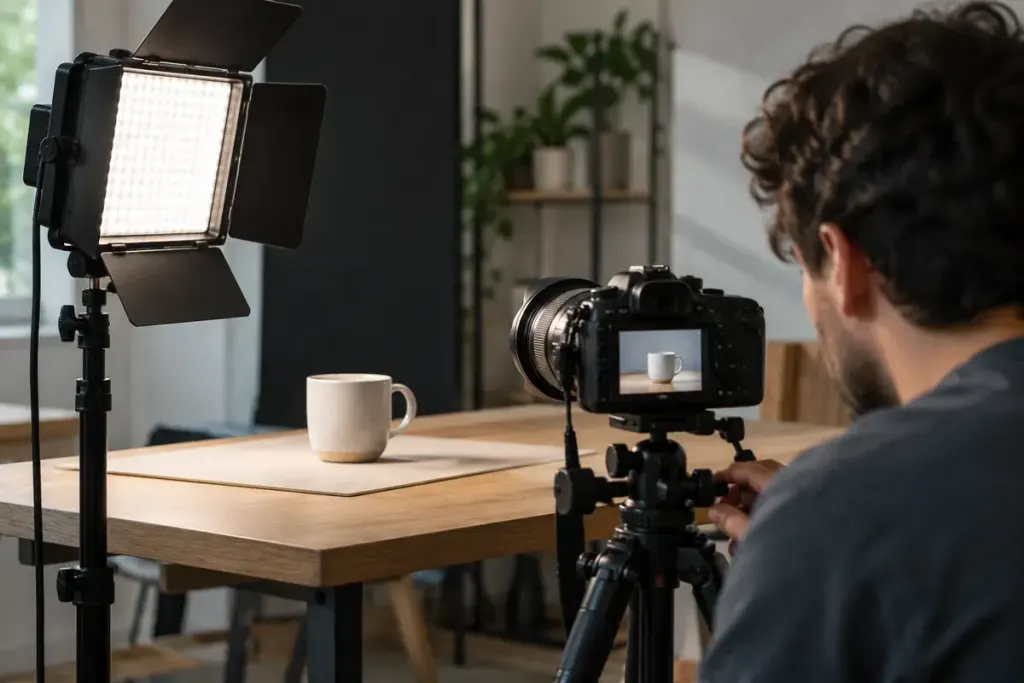
The room looks evenly lit, but the recording shows pulsing brightness or dark bands. Your eyes and the camera do not sample the light in the same way. A lighting test is usually more informative than recording another full take and hoping the problem disappears.
Change one light at a time
Keep the framing and camera position steady. Record a short clip with the suspected lamp on, then a comparable clip using another available light source. If several lamps are mixed, isolate them where practical. Note whether dimming a lamp changes the effect.
Sony’s explanation of banding and flicker under artificial light describes how fluctuating illumination can interact with capture timing. The exact remedy depends on the camera, light and recording mode. Do not assume that a setting which helped under one fixture will solve every LED or display.
Keep the comparison controlled
Record the frame rate, shutter setting and any anti-flicker option you change. Use the camera’s manual to identify supported adjustments. Review the saved clip at normal playback speed as well as paused; a clean-looking live preview may not reveal everything in the recording.
If changing the shutter improves flicker, examine movement too. Hands, walking subjects and camera pans may look different. A technical fix is only useful if the resulting motion still suits the video.
When you cannot control venue lighting, allow time for a test before the important action. You might need a different filming position, an approved light source or advice from someone familiar with the equipment. Avoid promising that software will repair every affected shot afterwards.
Save the successful test with a small setup note. On the next shoot, reproduce the useful conditions and test again rather than trusting a remembered number. The goal is a clean recording under the lights actually present, not a universal shutter recipe.