
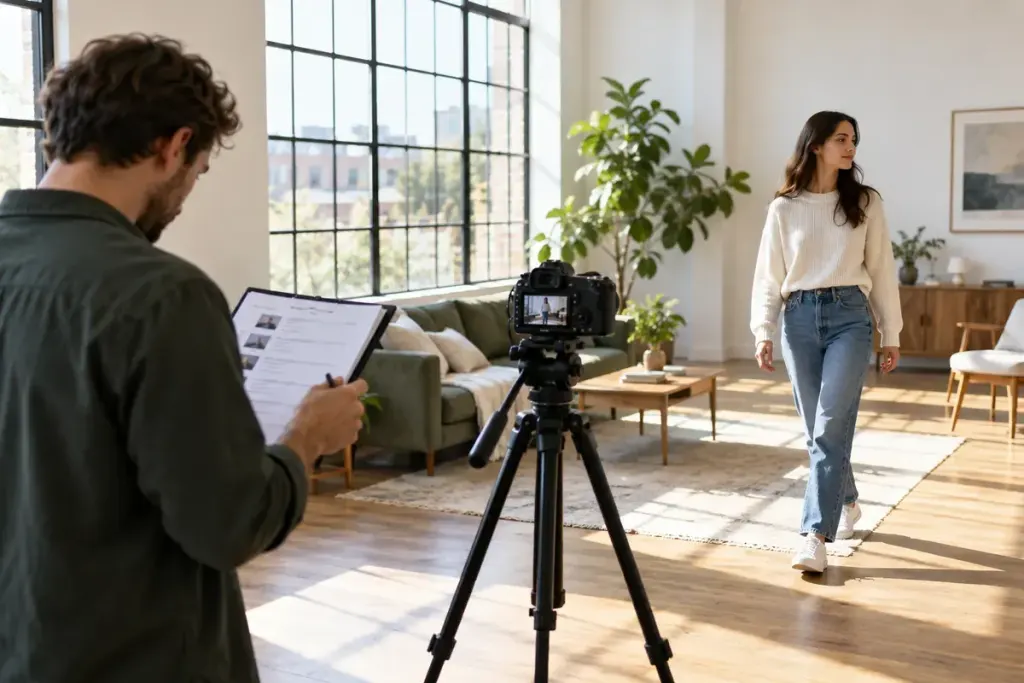
A person leaves a doorway moving to the right. In the next shot, they continue along a path but appear to move left. Each clip looks fine on its own, yet the edit can suggest that they turned around. Screen direction is one small detail that helps separate shots feel like a continuous journey.
Choose the direction before collecting angles
For a simple sequence, note where the subject enters and exits the frame. Film the next part with that relationship in mind. A quick sketch of the route can be enough; you do not need a complicated storyboard for three useful shots.
When filming an interaction, think about the imaginary line between the people or along the movement. Keeping related camera positions on a consistent side can help preserve their apparent positions. Crossing that line deliberately is possible, but the audience needs enough information to understand the change.
Give the edit a way to reset
A wider view showing the turn, a shot directly along the movement or a clearly motivated camera move can reorient the viewer. Choose the solution that honestly describes what happened. A close-up of an unrelated object may hide a cut without explaining the geography.
For an illustrative café sequence, film the person approaching, a wider view of the doorway and a detail of the hand opening it. Check the rough order on location. If the approach and exit conflict, you can still capture a connecting shot while the scene is available.
Review the sequence without sound
Watch the clips together and ask where the subject seems to be going. If the movement feels like a reversal, identify the shot that changes the relationship. Do not rely on music to conceal a confusing transition.
Extra footage earns its place when it supplies information the edit needs. A few coherent angles usually offer more useful choices than a large collection of attractive shots that disagree about the action.