
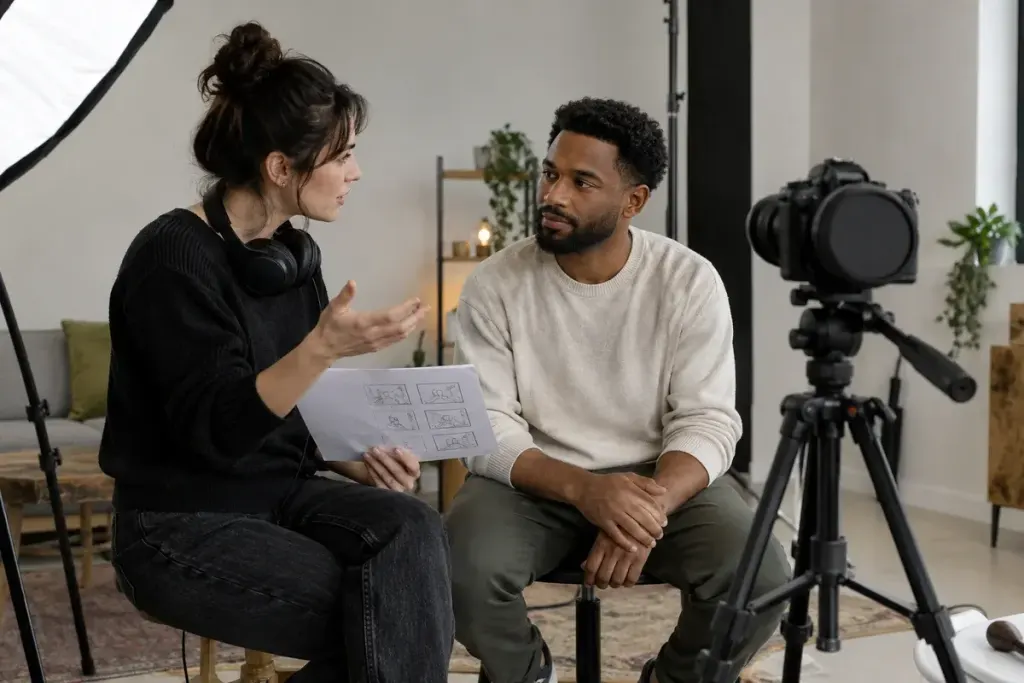
Someone agrees to a short interview for a community video. Months later, the same clip appears in a paid advertisement with a different message. The original “yes” did not necessarily describe that later use.
For a creator, permission works best as a clear conversation about the content and its destination. A signature alone cannot repair an explanation that was vague or misleading.
Describe the intended use before recording
Explain what you are making, where it will appear, who is likely to see it and whether it will be edited into shorter clips. Mention commercial use or promotion when relevant. Give the person a genuine chance to ask questions or decline.
YouTube’s privacy guidance tells creators to get permission before filming other people or posting personal information. Platform guidance is only one part of the picture; local laws and the circumstances of filming may require additional advice.
Separate participation from sensitive detail
A person may be comfortable appearing on camera but not sharing a surname, workplace, address or health information. Ask which details can be used and avoid capturing private documents or identifying information in the background.
Children and people who may need support with consent require appropriate safeguards and relevant permissions. Do not assume a companion can decide for another adult or that being in a public place removes every privacy consideration.
Keep the edit within the agreement
Editing for clarity is different from changing the apparent meaning of someone’s words. Preserve context and do not join separate answers into a claim the participant did not make. If the project’s purpose changes, revisit the permission rather than stretching an old agreement.
For an illustrative workflow, keep the agreed purpose, contact route, attribution preference and approved uses together with the clip reference. Store that record securely; it should not expose personal details to everyone who can access the editing folder.
Explain what can happen after publication
Discuss how concerns or withdrawal requests will be handled and any practical limits once material has been shared or copied. Avoid promising complete removal from the internet if you cannot deliver it.
Before export, compare the final video with the permission record. The useful question is not merely “Did this person agree to be filmed?” It is “Does this publication match what we explained and what they agreed to?”